
How to Choose the Right Snowboard Profile
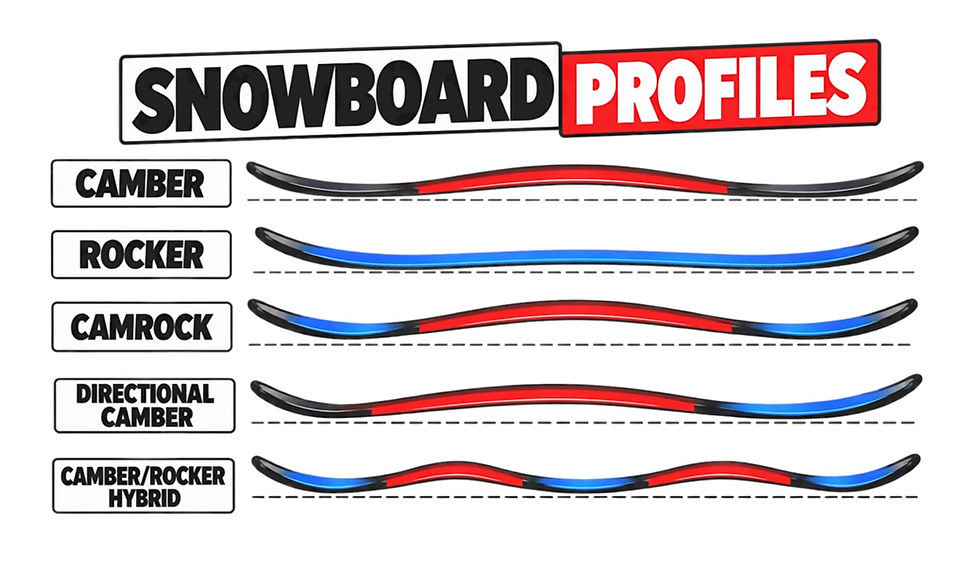
Choosing the right snowboard profile can completely change the way your board feels on the mountain. Some profiles are designed to carve hard and ride fast, while others make turning easier, improve float in powder, or give you a more playful feeling in the terrain park.
A snowboard's profile is essentially the shape the board takes when viewed from the side. During manufacturing, the different layers of a snowboard are pressed together in a mold using heat and pressure. That mold permanently creates the board's profile.
There isn't one profile that's best for everyone. The right choice depends on your ability level, riding style, and the terrain you spend the most time on. Here are the five main snowboard profiles you should know, plus flat as a bonus.
1. Traditional Camber
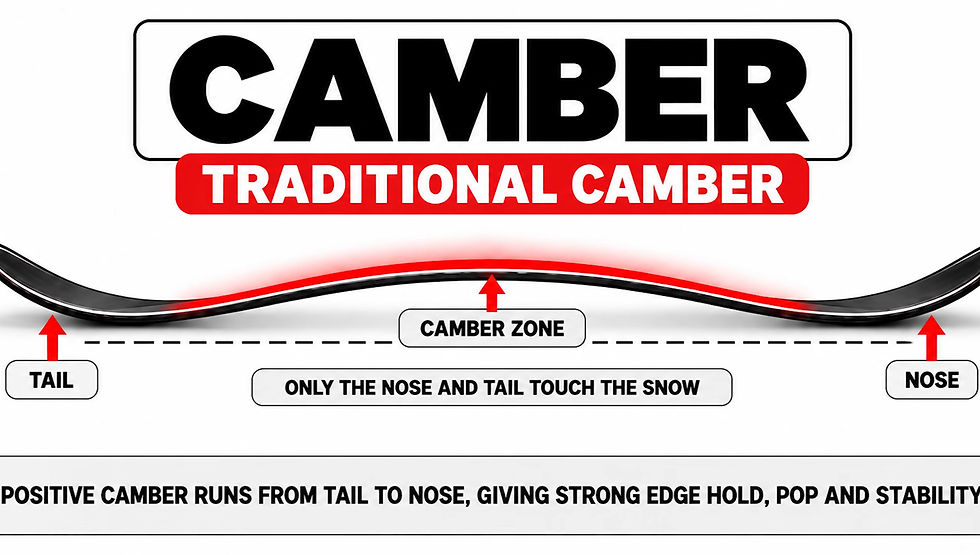
Traditional camber is the classic snowboard profile. When the board is sitting flat without a rider on it, the center rises away from the snow while the nose and tail contact areas sit lower.
Camber is all about edge hold, stability, control, and energy. When you put pressure into the board, the camber pushes back and creates a lively, responsive feeling.
Best for:
Carving • Speed • Advanced riding • Powerful turns
Traditional camber is one of my favorite profiles for carving because so much of the effective edge can engage with the snow. That extra edge contact gives you confidence when you're riding quickly or laying the board over into a carve.
Camber also generates plenty of energy and pop, making it great for ollies, aggressive turns, jumps, and riders who want a responsive board.
The downside is that camber can feel more aggressive and catchy. Beginners may find it less forgiving because mistakes with your edges are more likely to result in catching an edge.
Some traditional camber boards I've enjoyed riding include the Clew Altair and Burton Custom.

2. Rocker
Rocker is essentially the opposite of traditional camber. The center of the snowboard sits closer to the snow while the board rises toward the nose and tail.
This creates a loose, playful and forgiving feeling.
Best for:
Beginners • Easy turning • Butters • Playful riding
Because the contact points are lifted away from the snow, rocker boards tend to be easier to turn and less likely to catch an edge. That's one reason rocker can be a great option for beginner snowboarders.
Rocker is also fun for riders who enjoy butters and other playful freestyle tricks.
There are some trade-offs. A full rocker board generally won't feel as stable at high speeds as a traditional camber board, and you'll typically sacrifice some edge hold and energy.
If your priority is a forgiving snowboard that's easy to maneuver, however, rocker is worth considering.

CamRock combines elements of both camber and rocker.
Typically, you'll have camber through the center of the snowboard and rocker toward the nose and tail. The result is one of the most versatile snowboard profiles available.
Best for:
All-mountain • Park • Intermediate riders • Riders who want one board for everything
The camber section provides stability, edge hold, pop and energy. The rocker toward the tips makes the board more forgiving and easier to press.
That combination makes CamRock particularly fun in the terrain park. You still have enough stability to approach and land tricks, but the rocker makes the board less catchy and easier to butter.
It's also an excellent profile for cruising around the entire mountain because it sits between the aggressive feeling of full camber and the loose feeling of full rocker.
Two CamRock boards I've enjoyed are the CAPiTA Indoor Survival and K2 Afterblack.

4. Directional Camber
Directional camber is designed primarily for riding forward. You'll typically find a strong camber zone through the back half of the board combined with rocker extending toward the nose.
For me, this is one of the best profiles for powder.
Best for:
Powder • Freeriding • Directional riding • Float
The large rocker section in the nose helps the front of the snowboard rise through deep snow. This reduces how much you have to lean back to keep the nose above the surface.
Meanwhile, camber toward the back of the board provides stability, control and energy through your turns.
The biggest disadvantage is switch riding. Because the profile is intentionally designed around traveling primarily in one direction, it isn't as natural for riders who spend a lot of time riding switch or doing freestyle tricks in both directions.
Some directional camber boards I've enjoyed include the Burton Hometown Hero and K2 Excavator.

5. Rocker/Camber Hybrid
This profile changes things around again. Instead of having camber through the center, you have rocker in the center with camber zones underneath your feet, followed by additional rocker toward the nose and tail.
It sounds complicated, but the result is a unique combination of maneuverability and control.
Best for:
Powder • Trees • Quick turns • All-mountain riding
The center rocker allows the board to pivot and turn quickly. That's especially useful when you're navigating trees, making quick turns in powder, or changing direction in tight terrain.
The camber zones underneath your feet add back some of the energy, edge control and stability you'd otherwise lose with a full rocker snowboard.
This profile can also provide excellent float in powder while remaining quick and maneuverable.
One of my favorite examples of this style is the Lib Tech Orca.
The trade-off is that the rocker through the center can sacrifice some stability and edge hold compared with traditional camber, particularly when you're riding fast or dealing with firm and icy snow.

Bonus: Flat Profile
A flat snowboard doesn't have a pronounced camber or rocker shape through most of the board. Instead, much of the base sits relatively flat against the snow.
Best for:
Intermediate riders • Predictability • Balanced all-mountain riding
Flat profiles sit somewhere between camber and rocker. They offer more stability than a heavily rockered board while remaining relatively easy to turn and maneuver.
You won't necessarily get the powerful energy of full camber or the extreme forgiveness of rocker, but that's also the advantage: flat boards provide a balanced, predictable feeling without going too far in either direction.


Comments